House clearance case study how one landlord avoided a council fine: what went wrong, what saved the day, and what you can learn
If you are a landlord, letting agent, or property owner, you already know the awkward feeling that comes with a property left half-cleared after a tenant moves out. Boxes in the hallway. A sofa nobody wants. Black sacks by the back gate. And, if you leave it too long, a letter from the council can land on the doormat and suddenly the whole thing is more than just a nuisance.
This house clearance case study how one landlord avoided a council fine looks at a very ordinary problem with very ordinary pressures: time, compliance, neighbours, and money. No drama for the sake of it. Just a real-world style example of how quick action, proper waste handling, and a sensible clearance plan can stop a messy property from turning into a costly one.
We will walk through what happened, why it mattered, how a house clearance service reduced the risk, and what you should do if you ever find yourself in the same position. Truth be told, most of the stress comes from waiting too long.
- Why it matters
- How it works
- Key benefits and practical advantages
- Who this is for and when it makes sense
- Step-by-step guidance
- Expert tips for better results
- Common mistakes to avoid
- Tools, resources and recommendations
- Law, compliance, standards, or best practice
- Options, methods, or comparison table
- Case study or real-world example
- Practical checklist
- Conclusion
- Frequently Asked Questions
Why House clearance case study how one landlord avoided a council fine Matters
A council fine is rarely the first problem. Usually there is a chain reaction. A property is left cluttered, rubbish spills into the wrong place, neighbours complain, and the landlord begins losing control of the timeline. By the time a formal warning arrives, the property is already harder to let, harder to inspect, and harder to defend.
That is why this topic matters. A house clearance is not just about getting rid of old furniture or bagged waste. It is about protecting a rental asset, reducing complaint risk, and proving you acted responsibly. If a council officer sees a neglected property, fly-tipped waste, or unsafe storage in an accessible area, they may treat it seriously. The exact outcome depends on the situation, but no landlord wants to be the one explaining why the front garden looks like a temporary skip.
There is also the reputation side. A tenant turnover that drags on can make a home look unloved. That affects photos, viewings, and the confidence of new applicants. In a busy rental market, small delays become expensive. And if the pile-up includes sofas, broken beds, damp cardboard, or a garage full of random stuff, the issue can escalate fast.
For landlords, the practical lesson is simple: clear early, document what you do, and use a disposal route that is suitable for mixed household waste. If you need help with a full property reset, a service like house clearance can be more efficient than trying to piece everything together yourself.
How House clearance case study how one landlord avoided a council fine Works
In plain English, the process works by removing unwanted items quickly, sorting them properly, and making sure the property is left in a condition that is safe, tidy, and ready for the next step. That next step might be decorating, repairs, inspection, or re-letting. The important part is that the clearance is handled as a managed process, not a last-minute panic.
In a landlord situation, the practical workflow usually looks like this:
- Initial assessment - identify what needs to go, what stays, and whether there are any hazards or restricted items.
- Access planning - decide where loaders can park, how items will be moved, and whether keys or timed access are needed.
- Clearance and sorting - separate reusable, recyclable, and general waste where possible.
- Removal and disposal - transport items to an approved waste route or recovery facility as appropriate.
- Final tidy-up - sweep through the rooms, hallways, and outside areas so the property is presentable.
That is the basic shape of it. The details matter, though. A landlord with one neglected property above a parade of shops will have a different access problem from someone dealing with a terraced house, a loft full of broken furniture, or a garage that has quietly become a storage cave over six years. Small thing, but it matters.
If the job includes furniture, mixed items, or awkward bulky pieces, you may also want a specialist route such as furniture clearance or furniture disposal. That can help avoid the common mistake of leaving oversized items behind because "they'll sort themselves out later". They never do.
Key Benefits and Practical Advantages
The biggest benefit is obvious: faster resolution with less risk of a council issue. But once you look a little deeper, the real value spreads out across the whole tenancy cycle.
- Reduced enforcement risk - clearing waste promptly lowers the chance of complaints turning into formal action.
- Better property condition - a clean start makes repairs, decorating, and inspections easier.
- Faster re-letting - a property that looks cared for attracts better attention.
- Less neighbour tension - nobody likes bins, mattresses, or broken cabinets sitting outside for days.
- Clearer record-keeping - a professional service gives you a cleaner paper trail than ad hoc arrangements.
There is a subtle benefit too: peace of mind. Landlords spend enough time worrying about void periods, rent arrears, repairs, and compliance. If clearance is one less thing on the list, that is not nothing. Not at all.
For larger or mixed clearances, some landlords also combine house clearance with waste removal so the property can be dealt with in one visit rather than stretched out across several small trips.
Who This Is For and When It Makes Sense
This kind of house clearance is most useful for landlords, private property owners, letting agents, and estate managers who need a property cleared safely and quickly. It is especially relevant when there has been a tenancy ending, an abandonment issue, probate-related delay, or an accumulation of items after refurbishment.
It also makes sense when you are dealing with:
- a tenant who has left furniture or rubbish behind;
- a property that has been occupied in a way that created extra waste;
- urgent viewings or a tight re-let schedule;
- a complaint from neighbours or the local authority;
- outbuildings, lofts, or garages that are no longer usable.
Not every job needs a full house clearance, to be fair. Sometimes a targeted garage clearance, loft clearance, or even home clearance is enough. The trick is choosing the right scope before the mess spreads.
Ask yourself: is this a simple tidy-up, or is the property at risk of attracting complaint, delay, or a safety issue? That question alone usually points you in the right direction.
Step-by-Step Guidance
If you are trying to avoid a fine, speed matters, but so does sequence. Rushing the wrong part can create more work later. Here is the approach that tends to work best in the real world.
- Walk the property first
Take a slow look through every room, cupboard, loft hatch, shed, and outside area. Make a note of bulky items, sharp waste, damp materials, and anything that may need special handling. - Separate essential items
Keep documents, keys, medication, tenant belongings that may need checking, and any items the landlord is legally or practically obliged to retain. It sounds obvious, but in a rush obvious things get missed. - Photograph the condition
Before the clearance, take clear pictures of the rooms and outside areas. This helps with records, disputes, and contractor instructions. The camera on your phone is fine. No need to overthink it. - Choose the right clearance scope
Decide whether you need the whole property, just furniture, or a specific zone such as the garage, loft, or garden. A more targeted plan can save time and money. - Check access and parking
Think about stairwells, narrow roads, resident permits, loading points, and time restrictions. A clearance team arriving with no access plan is how simple jobs turn into long ones. - Book a service with a clear brief
Explain what is on site, what is fragile, and what must not be moved. If you need pricing clarity, start with pricing and quotes so you understand how the work may be assessed. - Confirm disposal and recycling approach
Ask how reusable or recyclable items are handled. This matters for sustainability and, frankly, for credibility too. - Do the final sweep
Once the clearance is done, check corners, skirting, external steps, and hidden spaces. One forgotten bag in the back yard is enough to undo a tidy job.
If the property includes outdoor waste or overgrown areas, a complementary garden clearance may be the sensible follow-on. House clearance and garden clearance often go hand in hand, especially after a long void period.
Expert Tips for Better Results
In our experience, the difference between a smooth job and a stressful one is rarely the size of the property. It is the planning. A few small habits make a big difference.
- Book before the deadline gets tight. If a council warning has already arrived, do not leave the clearance until next week. By then, you may be negotiating under pressure.
- Prioritise the visible areas first. Front access, hallways, and windows often shape first impressions. Those are the parts neighbours and officers notice quickly.
- Keep communication simple. One contact person, one written brief, one agreed scope. It avoids the classic "I thought you meant the shed as well" moment.
- Use the property's next step to guide the clearance. If decorators are coming in, clear to a standard that lets them start immediately. If the agent is photographing the property, clear to a presentation standard rather than a bare-bones dump-it-all standard.
- Ask about insurance and safety. Moving heavy or awkward items down stairs is where damage usually happens. A properly organised team should be mindful of this. You can also review insurance and safety if you want to understand how a provider frames that responsibility.
A small but useful tip: keep a written note of the date the clearance was completed, who carried it out, and what was removed. It is boring paperwork, yes. But boring paperwork is often what saves time when questions come later.
Common Mistakes to Avoid
This is where many landlords get caught out. The mistakes are usually simple, which is annoying because simple mistakes are the easiest to avoid.
- Leaving waste outside "just for now" - temporary piles have a habit of becoming the problem itself.
- Assuming bulky items can be dumped with household bins - they usually cannot, and that assumption can create complaints quickly.
- Skipping the paperwork - without records, it is harder to show you acted promptly and responsibly.
- Using the wrong service type - if the job is actually an office, garage, or mixed-use clearance, pick the closest real match rather than forcing a one-size-fits-all approach.
- Ignoring access issues - a flat above a shop is not the same as a driveway clearance. One van parked badly can cause a whole morning's worth of problems.
- Forgetting hidden areas - lofts, cupboards, under-stairs spaces, and sheds are where surprises live. Not nice ones either.
There is another common error: thinking the cheapest quote is always the best quote. Sometimes it is fine. Sometimes it means the job is under-scoped, which becomes a bigger bill or a half-finished clearance later. That is the sort of economy that bites back.
Tools, Resources and Recommendations
You do not need a complicated toolkit for a landlord clearance, but you do need a sensible one. A few practical items can make the process much easier.
- Phone camera - for before-and-after photos and notes.
- Basic inventory list - helpful if there are items to retain, recycle, or check with a former tenant.
- Labels or tape - to mark keep, remove, or review piles.
- Gloves and sturdy footwear - especially if you are doing the first walk-through yourself.
- Access notes - parking, keys, entry codes, neighbours, and any timing restrictions.
On the service side, it helps to understand the different kinds of clearance you might need. A mixed tenancy may involve a combination of flat clearance, office clearance, or even builders waste clearance if repairs or strip-out work has already begun. The right mix is often less about labels and more about what is actually sitting in the property.
If you want to understand the company side of things, it can also be useful to read about us and check service information such as recycling and sustainability. Those pages are helpful when you are comparing providers and trying to judge how seriously they take the work.
Law, Compliance, Standards, or Best Practice
This section needs a careful tone because clearance work touches on waste handling, landlord responsibility, and local enforcement. The exact legal position depends on the facts, the council, and the type of material involved, so it is best to speak in general terms.
For landlords, the safe approach is to treat clearance as a compliance-sensitive task rather than a general tidy-up. In practice, that means:
- not leaving items where they can create a hazard or obstruction;
- using a disposal route that is appropriate for the waste type;
- keeping evidence of prompt action;
- making sure access, lifting, and removal are done safely;
- avoiding informal dumping arrangements that could create liability later.
Best practice usually means acting early, documenting everything, and choosing providers who understand residential and rental-property clearances. If the house is being emptied after a difficult tenancy, that is exactly when a tidy process matters most. A chaotic one can look careless, even if the original problem was not your fault.
Also, if there is any uncertainty about potentially hazardous waste, damaged electricals, or items that should not be handled casually, stop and get proper advice before moving them. Better a short delay than a preventable incident.
Options, Methods, or Comparison Table
Landlords usually have three realistic options: clear it themselves, hire a general waste team, or use a dedicated house clearance service. Each route has a place, but they are not equal for every situation.
| Method | Best for | Pros | Watch-outs |
|---|---|---|---|
| DIY clearance | Very small jobs with easy access | Can seem cheaper upfront | Time-consuming, physically hard, disposal risk, multiple trips |
| General waste removal | Bulk waste and mixed loads | Convenient, quicker than DIY | May need clearer scoping for furniture or room-by-room clearance |
| Dedicated house clearance | Whole-property or landlord move-out jobs | Most practical for end-of-tenancy issues, better for time pressure | Requires a proper brief to avoid omissions |
For many landlords, the best answer is a dedicated clearance service with the ability to handle mixed waste and furniture. It keeps the job contained. That matters more than people think. A job that drifts for three days becomes three days of stress, and nobody needs that.
Case Study or Real-World Example
Here is a realistic example based on the kind of situation landlords often face.
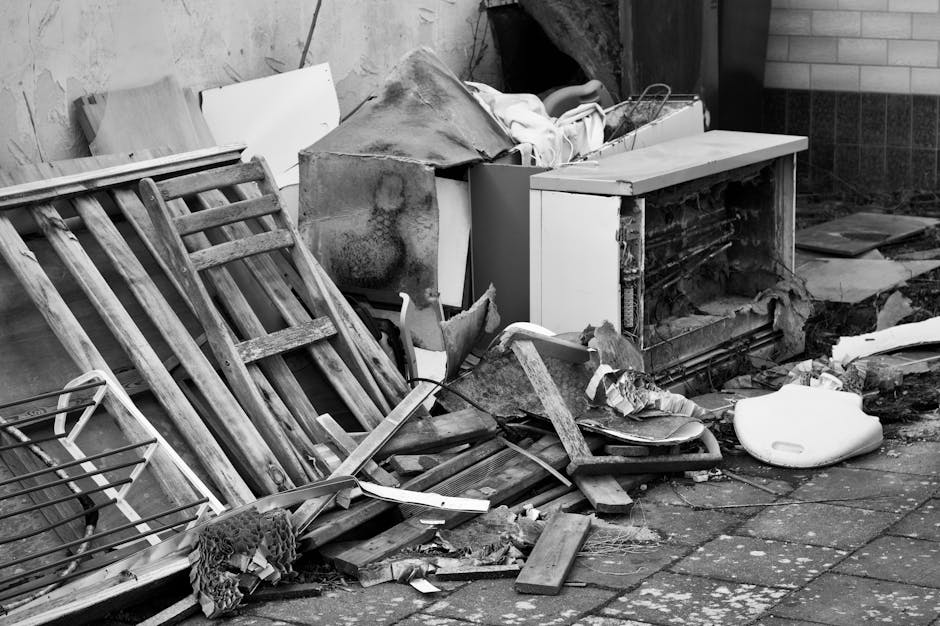
A landlord had taken back a small terraced property after a difficult end to a tenancy. The house was not in disrepair, but it had been left with a lot of items: a broken bed frame, a stained sofa, several bin bags, a fridge box, loose cardboard, and more bits in the garden than he expected. The tenant had already gone, the keys were back, and a neighbour had started asking questions about the mess at the front path.
The landlord's main worry was not just appearance. He had received a council warning that the property must be kept clear and safe, and he knew that if waste stayed outside much longer, the situation could turn into an enforcement headache. He needed the house presentable for inspection and relisting. Fast.
Instead of trying to do everything himself over several evenings, he booked a proper clearance and gave a clear instruction: remove the furniture, clear the bags, sort the reusable items, and leave the property ready for cleaning. The team also handled the outside clutter so the front of the house no longer looked like an abandoned storage bay. That part made a bigger difference than he expected. Funny how the front step says more than the living room sometimes.
Because the job was handled in one organised visit, the landlord could document the date, keep before-and-after photos, and show that action had been taken promptly. The property stopped attracting attention. The neighbour complaints eased. The council concern did not escalate. Most importantly, the landlord moved from reactive mode back to control.
Would a delay of another week have caused a fine? Nobody can say for certain. But the risk was real, and the proactive response removed much of it. That is the practical lesson: once a property starts to look neglected, speed and documentation matter as much as removal itself.
If the property had also included a neglected garage or side access, the landlord could have combined the job with garage clearance or a more general home clearance approach. Using the right scope is often the difference between a neat resolution and a drawn-out mess.
Practical Checklist
Use this before, during, and after a landlord clearance job.
- Confirm which areas need clearing.
- Photograph the property before work starts.
- Remove or set aside anything that must be retained.
- Check access, parking, and entry arrangements.
- Decide whether the job is a house clearance, furniture removal, or mixed waste removal.
- Ask how items will be handled and disposed of.
- Keep a record of dates, scope, and completion.
- Do a final walk-through of lofts, cupboards, gardens, and outbuildings.
- Arrange follow-on cleaning or repairs if needed.
- Make sure the property is ready for inspection or marketing.
Quick summary: if you act early, keep records, and use the right clearance type, you reduce risk in a very practical way. That is really the heart of it.
Get a free quote today and see how much you can save.
Conclusion
The lesson from this house clearance case study is straightforward: a landlord avoids trouble by treating clearance as a time-sensitive responsibility, not an afterthought. The faster the property is assessed and cleared, the easier it is to protect the value of the asset, keep neighbours onside, and reduce the chance of enforcement pressure turning into a fine.
There is no magic trick here. Just solid planning, good records, and the discipline to act before the mess becomes a headline in your own day. If you are staring at a property that is far more cluttered than it should be, start with the basics and keep moving. Small steps, done quickly, really do change the outcome.
And once the house is clear, quiet, and ready again, you can breathe a bit easier. That moment matters.
Frequently Asked Questions
What is a landlord house clearance?
It is the removal of unwanted items from a rental property, usually after a tenancy ends, before re-letting, or after a difficult occupancy. It can involve furniture, bags of waste, garage contents, and items left behind.
How does house clearance help avoid a council fine?
It helps by removing waste and clutter quickly, reducing complaints, and showing that the landlord acted responsibly. Councils are more likely to take concern seriously when a property stays messy or unsafe for too long.
Do I need a full house clearance or just furniture removal?
That depends on what is actually in the property. If the issue is mostly sofas, beds, and large items, furniture-focused clearance may be enough. If the whole home is cluttered, a full clearance is usually better.
Can I clear a property myself to save money?
You can, but it is often slower and more physically demanding. You also need to think carefully about disposal, access, and documentation. For larger jobs, DIY can become more expensive in time and hassle than people expect.
What should I do first if a council warning has already been issued?
Act quickly. Assess the property, take photos, separate anything that must stay, and arrange clearance as soon as possible. Delay is usually the worst move when a warning is already in play.
How long does a typical landlord clearance take?
It varies by property size, access, and volume of waste. A small flat can be much quicker than a full house with loft and garden clutter. The honest answer is: it depends on the mess and how easy it is to move.
What if the property includes a loft or garage full of items?
That is very common. In those cases, a targeted service such as loft clearance or garage clearance may be needed alongside the main house clearance. It is usually better to plan for those areas rather than discovering them halfway through.
Should landlords keep records after a clearance?
Yes. Photos, dates, and a short note of what was removed can be very useful. It is simple proof that action was taken promptly and professionally.
Is recycling part of a proper house clearance?
It should be where possible. Good practice is to separate reusable or recyclable items from general waste instead of sending everything through the same route. That is both more responsible and, frankly, more credible.
What are the biggest mistakes landlords make during clearance?
The main ones are leaving waste outside too long, not checking hidden areas, choosing the wrong service type, and failing to document the work. Those are small errors on paper, but they can cause very real problems.
How do I know whether a clearance company is suitable for rental properties?
Look for clear service information, sensible pricing, and a practical approach to safety and disposal. Pages like insurance and safety and recycling and sustainability can give you a better feel for how seriously a provider treats the work.
What if I also need repair or strip-out waste removed?
Then you may need a mixed approach that includes builders waste clearance as well as the main house clearance. It is common after a difficult tenancy or refurbishment, and it is better to plan it properly than to bolt on extra visits later.
Where should I go next if I want to arrange a clearance?
Start by reviewing the relevant service details, thinking through the scope, and checking the property access. If you need a broader overview of the company, the home page and service pages can help you decide what fits best.